

While researching a few related topics, I came across several articles about how Millennials are reshaping the B2B buying process. It immediately brought me back to a previous life, before visual communications, when I was a Millennial B2B buyer and manager in the automotive and heavy-duty parts industry.
Millennials are gaining more decision-making authority and purchasing power, and for a generation that grew up in a world where brands are omnipresent, understanding their mindset can go a long way. This is my story.
It had already been a long morning. No amount of coffee was going to change that.
A prolonged cold snap in Calgary was entering its second week, and the toll it was taking on aircraft deicing equipment was becoming significant. That was when the massive overhead door rumbled open again, another unit being brought in unexpectedly. Despite regular maintenance, the aging fleet was struggling in the extended cold, and breakdowns were becoming frequent.
The result?
Mechanics did an admirable job patching units and returning them to service. My team ensured parts were available immediately. We’d prepared well ahead of winter, but early demand exhausted our inventory faster than anticipated, and replacements weren’t readily available anywhere in our supply chain.
Which meant the hunt was on.
In the airline industry, one thing is constant: schedule. Delays cost thousands of dollars, regardless of season, and winter delays are no exception. A grounded aircraft, fully loaded and waiting 40 minutes to be deiced, can mean tens, or hundreds of thousands of dollars in lost profit.
And upset passengers.
And frustrated ramp workers.
And an equipment manager under pressure from head office.
Everything else stopped until the issue was resolved.
Relationships Over Everything
Fortunately, in the months leading up to winter, I had started building relationships with key suppliers. Now, those relationships mattered.
I had researched suppliers through internal systems, consulted purchasing and sourcing teams, and reached out to the OEM parts department via email and phone. They were based in Kansas; we were in Calgary, but distance wasn’t an issue. Their responsiveness, accessibility, and willingness to collaborate built trust early.
When we needed them, they were there. Every time.
They understood the pressure. They helped diagnose issues, confirm part numbers, and move quickly. I advocated for them internally, and managers at other Canadian stations took notice. Over 2.5 years, it became one of the best B2B customer experiences I’ve ever had.
Fast Forward
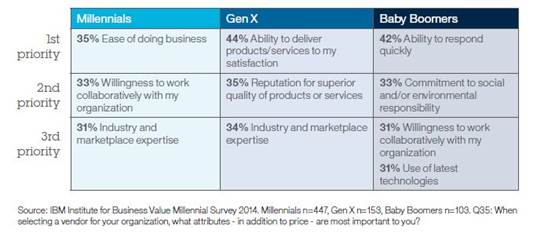
Earlier this week, while reviewing B2B marketing research, one paper stood out, published by IBM on Millennials in B2B buying. Nearly every insight mirrored my own experience.
What stood out most was the prioritization of trust, collaboration, and accessibility.
You know what wasn’t at the top of the list?
Price.
Features.
Benefits.
When time is limited and pressure is high, other factors matter more.
So What Does This Mean?
Here are my key takeaways.
Know Your Audience
At the time, I was just turning 30. I belonged to a Millennial cohort being handed increasing responsibility as Gen X and Baby Boomer leaders moved into senior roles or retired.
This group researches digitally, expects responsive communication, values strong customer experiences, and seeks deeper relationships than many suppliers anticipate. While I may not have been the primary audience for my OEM supplier, their brand was flexible enough to deliver on its promise to me.
Well-positioned B2B brands that empathize with customer challenges, foster collaboration, and make doing business easy are more likely to succeed with Millennial decision-makers and influencers.
Make Information Easy to Access
Millennials rely heavily on accessible information to form opinions and make decisions.
One shortcoming the OEM had was documentation. Technical manuals were still largely paper-based, which slowed part identification and occasionally led to errors, no small issue when time is critical.
Their collaborative support made up for it, but the lesson is clear: accessible data matters.
Deliver a Cohesive Branded Experience
From the first website visit to post-delivery follow-up, experience matters.
Understanding your brand, communicating it clearly, and living it consistently across every touchpoint are essential, not just for Millennials, but for every generation. This cohort grew up immersed in consumer brand experiences. A strong, cohesive customer experience builds trust, differentiation, and long-term loyalty.
The responsibilities I held were no different from older managers in the organization. The authority was the same. What differed was how I worked, how I researched suppliers, built relationships, and opened dialogue.
Failure would have meant costly delays and serious consequences. Understanding those differences led to better outcomes, for me, and for the suppliers who understood how to work with me.
If your B2B brand is struggling to connect with modern buyers, contact us to explore how clarity and experience can work together.